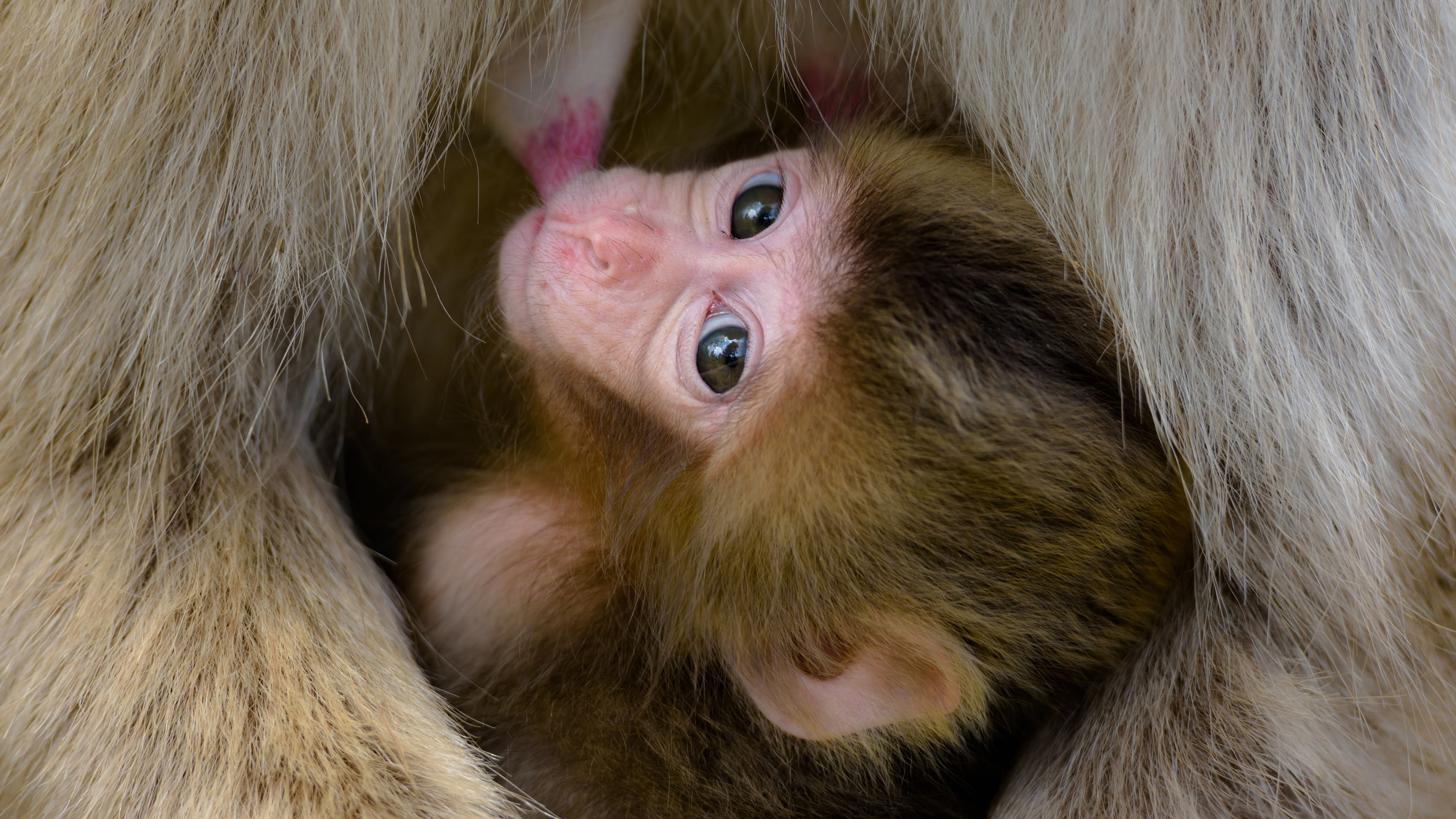
地獄谷の新しい生命
当地の群れは毎年5月前後に出産期のピークを迎え、子ザルは初夏まで母個体に密着して過ごす。夏にかけて歩行や遊び行動が増え、秋には採食と移動がより自立的になる。冬季の低温環境では群れが互いに接近し体温を共有する行動が多くみられ、その集団内に成長途中の子ザルも加わる。こうした季節的変化を通じて、ニホンザルの生活史が明瞭に観察できる点も本地域の特徴である。
Read in English — ✴︎ Jigokudani’s Snow Monkeys
The local troop reaches its birthing peak around May each year. Newborns remain in close contact with their mothers through early summer, gradually increasing walking and play behaviors as the season progresses. By autumn, they begin to forage and move more independently, though the mother–infant bond remains strong. During the cold winter months, the troop often gathers in close proximity to conserve body heat, a behavior in which the growing juveniles also participate. These seasonal patterns offer clear insight into the macaques’ life history within this region.
↩︎ Back to Wildlife Encounters
↩︎ Go to Top
Maebashi | Endemic Enclave | Japan