バガン遺跡群 | Bagan Archaeological Zone
バガン遺跡群は、ミャンマー中部のエーヤワディー川沿いに広がる平原地帯に位置する。11〜13世紀に繁栄したパガン王朝の都であり、最盛期には1万基以上の寺院・仏塔・僧院が建設された。現在も約2000基が残り、広大な大地に点在している。
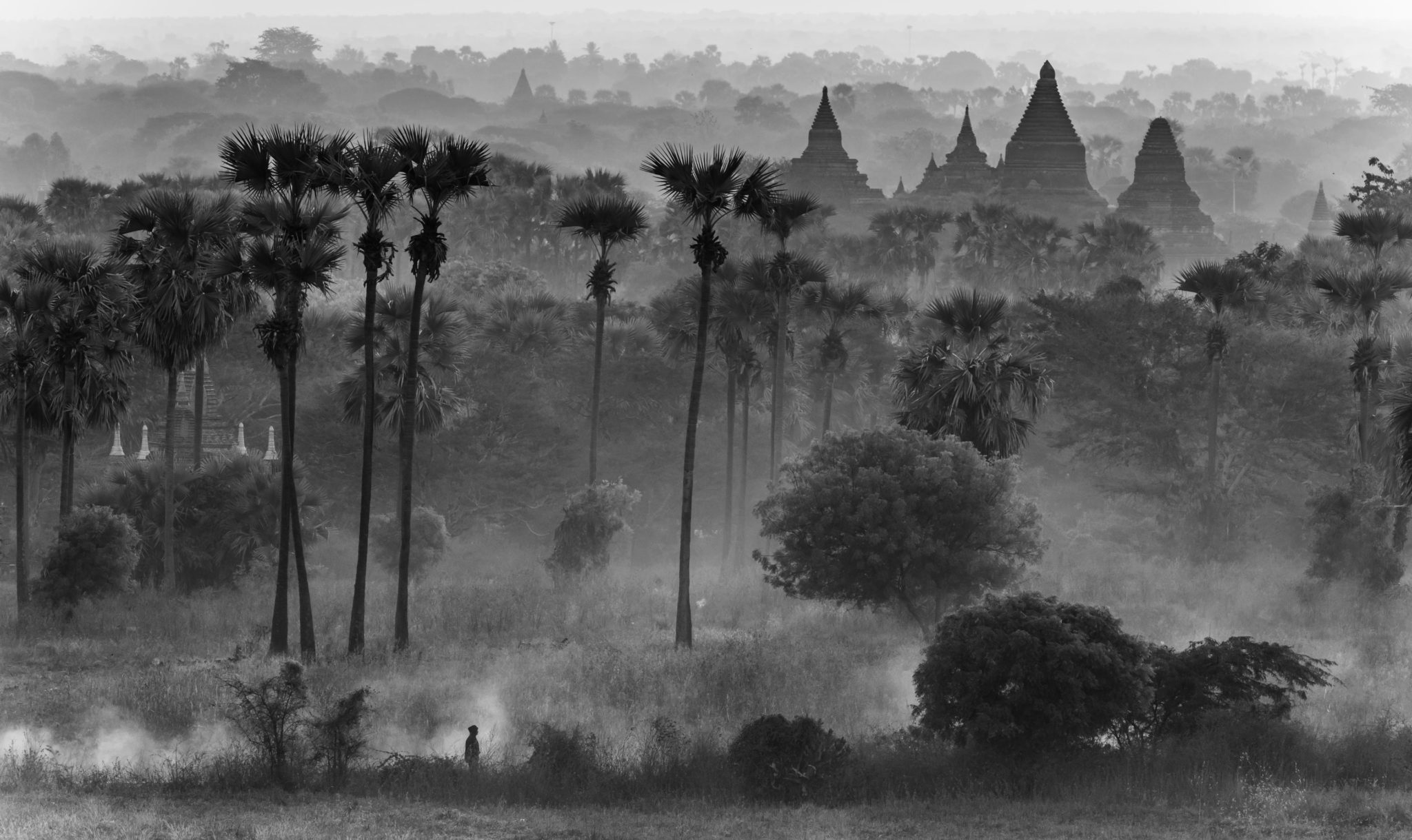
この地を潤すエーヤワディー川は、肥沃な土壌をもたらし農耕を支えた。平原には椰子の木や低木が立ち並び、遺跡群はあたかも自然の一部として溶け込む。乾季の朝には霧が立ち込め、仏塔の尖塔と木々の影が淡く浮かび上がり、幻想的な景観を生み出す。
風や雨、大地の浸食は遺跡を少しずつ削り、その形を変えながらも自然の営みの中に抱きとめてきた。現在も農民は遺跡の合間で畑を耕し、牛を放牧する。そこには、遺跡・人・自然の共存が垣間見れる。
バガンは人の信仰が生み出した石造建築と、大地のリズムが織りなす時間の層が重なり合う場所であり、人と自然の記憶をともに刻み続ける風景である。
Read in English — ✴︎ Bagan Archaeological Zone
The Bagan Archaeological Zone lies across the vast plains along the Ayeyarwady River in central Myanmar. Once the capital of the Pagan Kingdom, it flourished between the 11th and 13th centuries, during which more than 10,000 temples, stupas, and monasteries were built. Today, around 2,000 of these monuments remain, scattered across the landscape.
The Ayeyarwady River nourished the land with fertile soil, sustaining agriculture and the kingdom’s prosperity. Palms and low shrubs line the dry plains, where the monuments seem to merge seamlessly with nature. On dry-season mornings, mist blankets the fields, and the spires of the temples rise faintly above the trees, creating a dreamlike panorama.
Wind, rain, and the slow erosion of the earth have gradually reshaped the ruins, yet nature has continued to embrace them. Even now, farmers cultivate fields and graze cattle among the monuments, forming a landscape where ruins, people, and nature coexist.
Bagan is a place where stone structures born of human devotion intertwine with the rhythms of the earth — an enduring landscape that records the shared memory of people and nature.
↩︎ Back to Wander Visual Library
↩︎ Go to Top
Maebashi | Endemic Enclave | Japan