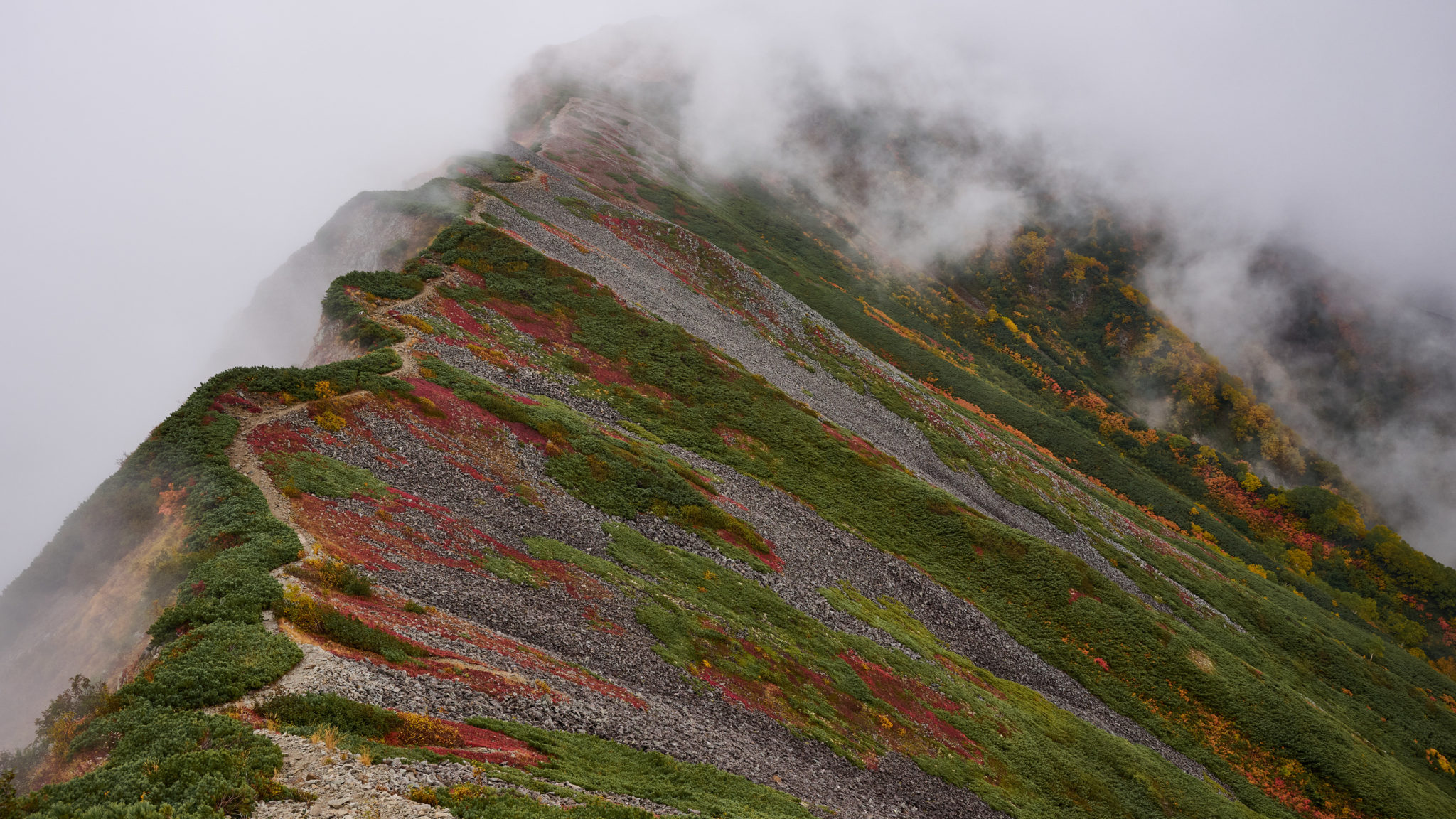
小蓮華山へと続く秋の稜線 | The Autumn Ridge Leading to Mt. Korenge
小蓮華山(標高2,766m)は、飛騨山脈(通称 北アルプス)に位置し、長野県と新潟県の県境をなす山である。白馬連峰の北東部に連なり、白馬乗鞍岳から白馬岳へと至る縦走路の中間にあたる。山体は花崗岩質で、風化によって生じた白色の岩肌が特徴的である。新潟県における最高峰でもあり、県境の象徴的存在となっている。
白馬大池から小蓮華山頂上方面へと続く尾根には雷鳥が生息しており、この区間は「雷鳥坂」と呼ばれる。周辺は風衝地形が顕著で、雷鳥が好むハイマツ帯と岩礫帯が交互に現れる高山帯の典型的景観を示す。
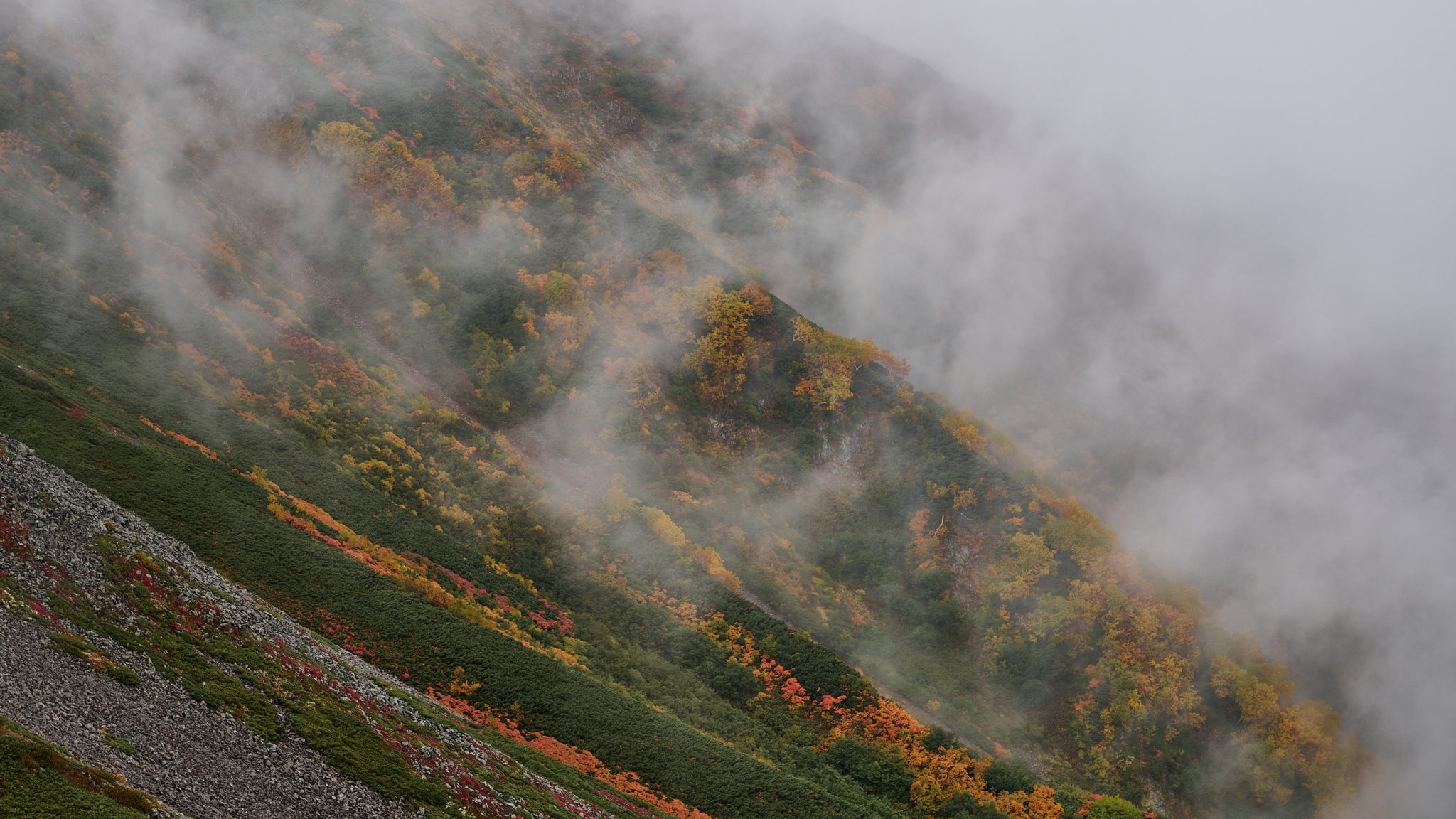
岩と草地が入り混じる斜面に緑と秋色がまだらに広がり、季節の進行に応じて粗野に剥き出している山肌の表情が魅惑的に変化してゆく。
Read in English — ✴︎ The Autumn Ridge Leading to Mt. Korenge
Mt. Korenge (2,766 m) lies in the Hida Mountains, commonly known as the Northern Japan Alps, along the border between Nagano and Niigata Prefectures. It forms part of the northeastern section of the Shirouma Range, situated roughly midway along the traverse route that connects Mt. Norikura (Shirouma Norikura-dake) and Mt. Shirouma. The mountain is composed mainly of granite, and its distinct white surface has been shaped by long-term weathering. It is the highest peak in Niigata Prefecture and serves as a symbolic landmark of the prefectural border.
The ridge extending from Hakuba-Oike Pond toward the summit of Mt. Korenge is home to rock ptarmigans (Lagopus muta japonica), and this section is known as “Raichozaka” or “Ptarmigan Slope.” The area is characterized by strong winds, with alternating patches of dwarf pine (Pinus pumila) and gravel terrain, representing a typical alpine landscape.
Across the slopes where rock and grassland intermingle, shades of green and autumn colors form a mottled pattern. As the season progresses, the mountain surface—bare and rugged—reveals subtle yet striking changes in its appearance.
↩︎ Back to Wander Visual Library
↩︎ Go to Top
Maebashi | Endemic Enclave | Japan